
Wildlings - Our Forest School
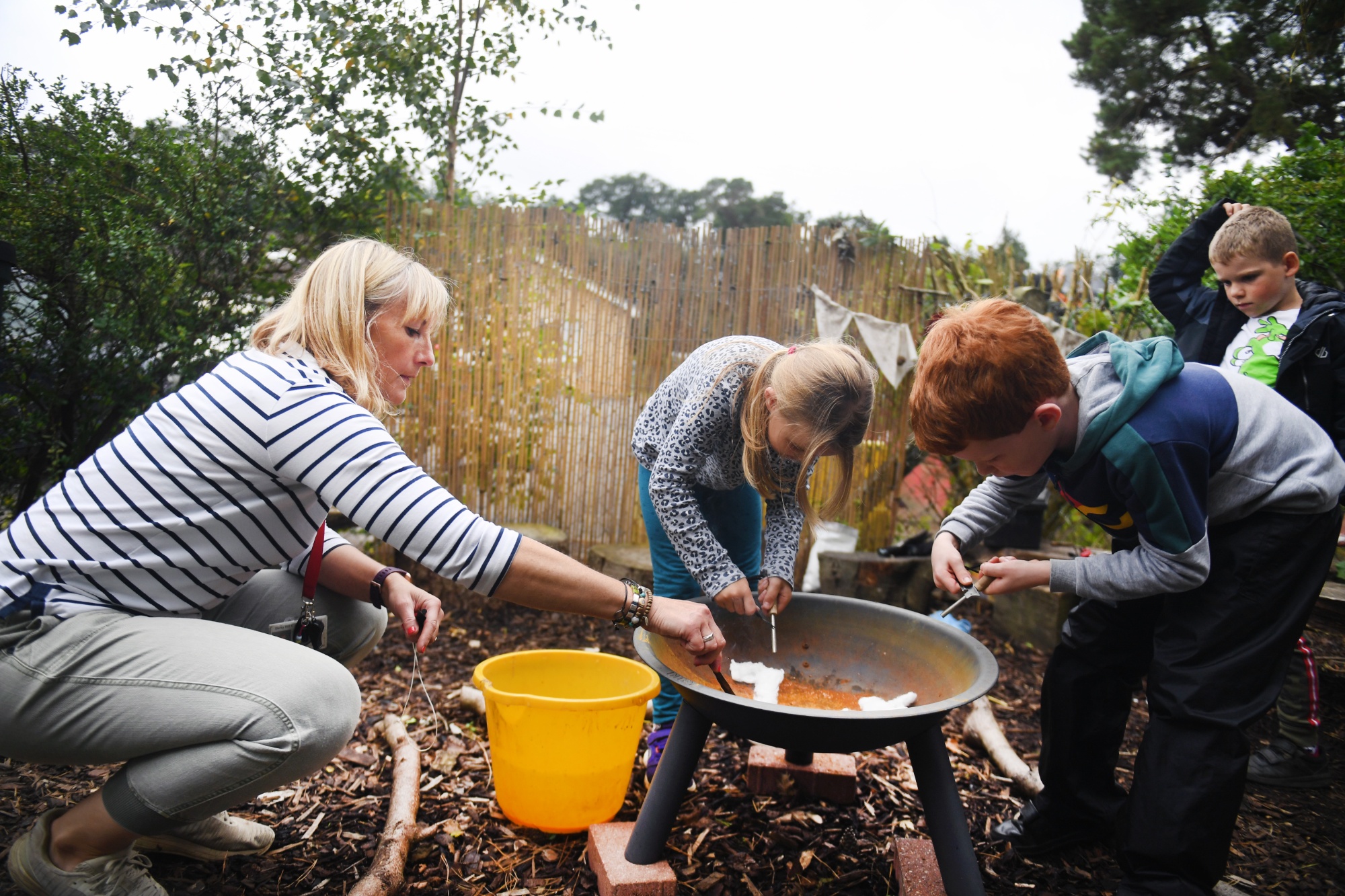
Forest School is a woodland based approach to learning and teaching - our Forest School has been named 'Wildlings' - a name chosen by two of our children, reflecting the excitement our children have when exploring the world around them. Forest School gives the children the opportunity to explore the outdoor environment within the school in a fun and safe way. It provides the children with more opportunities to learn and develop their confidence and self-esteem through hands-on experiences.
The children are given the opportunity to participate in a range of exciting and motivating activities during their 'Wildlings' sessions. Children will be given the opportunity to work with tools, play, learn, and grow in confidence, self-esteem and motivation whilst developing an understanding of the natural world.
The forest school initiative originated in Scandinavia and has been rapidly developing in England and Wales. One of the reasons for this enthusiasm is that forest schools have the same basic underlying principles adopted from the Scandinavian model. A qualified forest school leader devises a program of learning that is based on the children’s interests and that allows the children to build on skills from week to week, at their own pace. They provide a safe woodland environment for the children to explore, embedded in routine that is established early within the program. We are very fortunate to have our very own Forest School trained member of staff - Mrs Hand - who is very passionate about giving all our children exciting Forest School opportunities.
Benefits of forest school
Forest Schools offer a range of benefits for children’s social, emotional, physical, and cognitive development. Here are some key benefits of Forest Schools:
- Connection With Nature: Forest Schools provide children with daily contact with the natural world, promoting a deep connection between the child and nature. Research shows that spending time outdoors can improve mood, reduce stress, and promote overall well-being.
- Physical Development: Encouraging children to be outdoors climbing trees, exploring the natural landscape, and building dens develop physical strength, coordination, and gross motor skills. Giving children the opportunity to run, jump, climb, balance, and manipulate objects in unstructured, natural settings helps their overall physical development.
- Emotional Well-Being: Research shows that being in nature is linked to reducing anxiety, depression, and Attention Deficit Hyperactivity Disorder (ADHD). Forest Schools therefore provide a natural environment where children can explore freely and express their emotions in a calming environment which encourages emotional resilience.
- Social Skills: Forest Schools promote collaborative activities for children, such as teamwork during outdoor games, and cooperative building projects E.g. den building. These collaborative activities encourage social, communication, problem-solving, and negotiation skills. By working together children can learn to share resources, delegate roles, and respect each other’s ideas and boundaries.
- Risk Management: A key skill that children need to develop in childhood and to be used well into their adulthood is Risk Management. Forest Schools promote activities where children must calculate risk. These activities could be tree climbing to using tools under supervision. By developing key risk-assessment skills in early childhood, children can develop confidence and resilience. Research has shown that the more children are exposed to manageable risks the better they are at decision-making and self-regulation.
- Creativity and Imagination: Children's creativity and imagination flourish in natural environments. Forest Schools provide the perfect environment for imaginative play, storytelling, and creativity using natural materials. Therefore, enhancing children’s cognitive development, imaginative thinking, and a sense of wonder.
- Environmental Awareness and Appreciation: Children who spend time in nature develop a deeper understanding and appreciation of the natural world. Forest Schools include in their curriculum ecological education, teaching the children about local flora and fauna, ecosystems, and sustainable practices. By learning about how to look after nature you are sowing the seeds in children’s minds of how to look after the natural environment around them.
- Academic Learning: Outdoor learning can work perfectly alongside traditional classroom learning and aid academic performance. Research has shown that nature-based learning enhances cognitive skills such as attention, concentration, creativity, and problem-solving. It also supports a holistic learning approach that can be integrated across the curriculum.
- Health Benefits: Forest Schools promote overall health and well-being by encouraging children to be outside doing physical activities instead of being sedentary. Being outdoors in a natural setting allows children to breathe in the fresh air, have sunlight exposure, and be in contact with diverse microorganisms, which can strengthen their immune system and reduce the risk of heart problems.
- Long-Term Benefits: Studies have shown that Forest School experiences can have a positive impact on children. These experiences develop a love for the great outdoors which extends into adulthood and a lifelong appreciation for nature, a sense of environmental consciousness, and improved mental health outcomes.